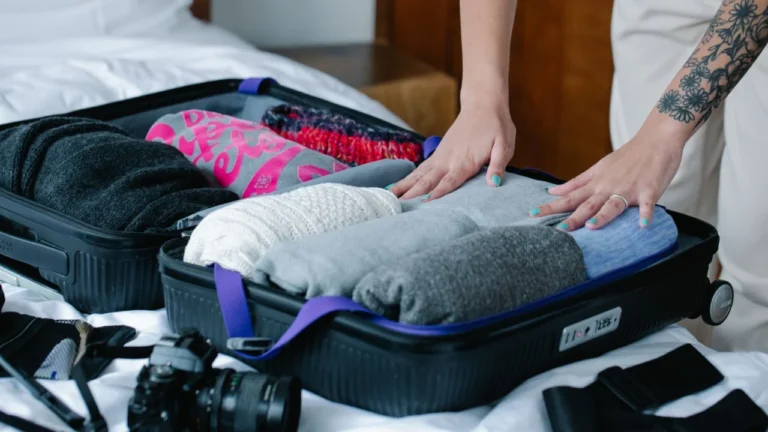
The best packing cubes for carry-on bags match the space inside the bag. Start with one medium cube for clothes and a small one for socks and underwear. Add a second medium only after you measure around the wheel wells, handle rails, and zipper. Buying a larger set gives you options for other trips, but most carry-ons only need a few pieces.
TL;DR
- For a shallow clamshell, start with a 10 × 7-inch cube and a 14 × 10-inch cube on separate sides.
- For a deeper roller, one mesh clothes cube and a small accessory pouch can keep shoes to one side.
- Measure the usable interior with the bag open. Recheck the depth with the cube full and the bag closed.
Packing cube sizes worth comparing
Dimensions below come from BAGAIL’s mesh set and Eagle Creek’s Reveal carry-on set. Check the variant you select. The same brand may sell regular and compression sets under similar names.
| Cube | Published dimensions | Where it works |
|---|---|---|
| Eagle Creek Reveal Compression S | 10 × 7 × 3 in open | Underwear, socks, and a thin layer on a shallow lid. |
| Eagle Creek Reveal Compression M | 14 × 10 × 3 in open | Folded shirts or pants on the main side of a clamshell. |
| BAGAIL mesh M | 12.9 × 11 × 4.7 in | A single clothes cube in a deeper compartment. |
| BAGAIL mesh L | 15.7 × 11.8 × 4.7 in | A deeper roller with room around the wheels. |
| BAGAIL mesh XL | 18 × 13.75 × 5 in | Check carefully. It exceeds the 13-inch usable width in the roller example below. |
Two layouts to try before buying
Layout 1: A deep roller with 20 × 13 inches of usable floor
Put a BAGAIL medium clothes cube at one end, with its 11-inch side across the width. That leaves roughly 7 inches of length in a rectangular compartment. Use that end for a small toiletry bag or shoes placed on their sides if they fit. If you swap in the larger 15.7-inch cube, just over 4 inches of length remains. Trace both footprints on paper and check where the wheels intrude.
Layout 2: A clamshell with shallow halves
In an example case with a 19 × 12-inch main side and roughly 3 inches of depth on the other side, try an Eagle Creek medium in the main half and a small in the lid. Keep hard objects away from each other across the zipper line. Eagle Creek lists a 1-inch compressed depth for these cubes. Your loaded cube can be thicker, so close the case and measure it after packing.
Which set should you buy?
Start with BAGAIL’s mesh set if your deeper carry-on can take one of the clothing cubes and you’ll reuse the other pieces in a larger suitcase. Compare Eagle Creek’s Reveal compression cubes if you need shallower storage or a smaller footprint. The examples above compare listed sizes with sample interiors.
Once you know what fits, use our short-trip carry-on checklist or the seven-day wardrobe and laundry plan to decide what goes inside.
If depth is the problem, compare compression cubes and regular cubes using the same clothes.
Carry-on packing cube FAQs
How many cubes should I take in a carry-on?
Two are enough for many trips: one for clothing and one for basics. Add a third if you need to separate a specific outfit or dirty laundry.
Will an 18-inch cube fit a 22-inch carry-on?
Maybe. The 22-inch measurement often includes wheels and handles. Compare all three dimensions with the compartment you can actually use.
Do packing cubes save weight?
A cube adds its own weight. Compression may reduce the space taken by soft clothing, but airline weight limits still apply.